Visit to the Château de la Chapelle d'Angillon
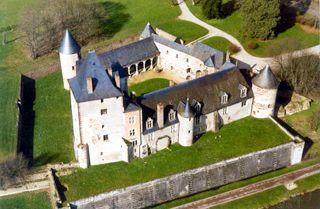
Château de la Chapelle d'Angillon – Cultural Tours Description : The Château de la Chapelle d'Angillon , of striking beauty, offers visitors a true journey through time. Among its many treasures: A view of the castle from the sky , which allows you to admire…
 Offered by
Château de la Chapelle d'Angillon
La Chapelle d'Angillon
Offered by
Château de la Chapelle d'Angillon
La Chapelle d'Angillon
Description

Château de la Chapelle d'Angillon – Cultural Tours
Description :
The Château de la Chapelle d'Angillon , of striking beauty, offers visitors a true journey through time. Among its many treasures:
- A view of the castle from the sky , which allows you to admire its imposing architecture and its natural environment.
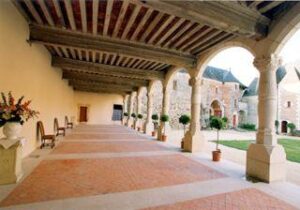
- A Renaissance gallery , which exhibits works of art and allows one to appreciate the magnificence of the era.
- Pomona and Vertumnus , a remarkable work by Jacques Stella, a student of Nicolas Poussin, dating from the 17th century. This painting is inspired by Ovid's Metamorphoses and perfectly illustrates the artistic mastery of the period.
- The literary connection with Alain Fournier : The château also has a link with the novel *Le Grand Meaulnes* , written by Alain Fournier, which was adapted for the screen by G. Albicocco in 1967, starring Jean Blaise and Brigitte Fossey. The film, shot in the landscapes of Berry, pays homage to the captivating atmosphere of the novel.
A visit to this castle allows you to discover a unique historical and cultural wealth, while enjoying a splendid natural setting.
A visit to the Château de la Chapelle d'Angillon: time, stone and light
There are places where time doesn't seem to have stopped, but rather to have chosen a different rhythm. The Château de La Chapelle-d'Angillon , standing in the heart of Berry, belongs to this category of residences where centuries never completely fade. They accumulate, like the rings of an ancient tree. Every stone, every archway, every reflection in the moat seems to remind us that people come and go, while the place continues to bear their memory.
A fortress born in the Middle Ages
The castle's history begins in the 11th century , when Gilon de Sully commissioned the construction of an imposing Romanesque keep , intended to watch over the surrounding lands and protect the inhabitants. At that time, the dwelling was far from a palace. It was primarily a refuge. The walls were thick, the openings narrow, the towers massive. It was built to withstand wars, invasions, and the uncertainties of a world where security was a daily struggle.
Over the centuries, the fortress developed. New towers appeared, the moats were reinforced, and the ramparts were completed. Yet, behind this military architecture, another story was already beginning to unfold: that of a lordly residence destined to become a place of art as much as a symbol of power.
The Renaissance brings light
At the end of the 15th century , under the influence of Marie d'Albret , the castle underwent a profound transformation. The apartments became more comfortable, the windows were enlarged, and light finally entered the formerly austere rooms.
But it was at the beginning of the 16th century that one of the jewels of La Chapelle-d'Angillon appeared: the Renaissance gallery .
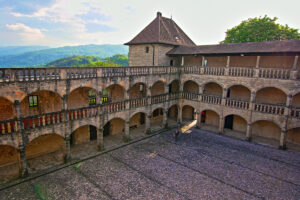
Long and elegant, it opens onto the inner courtyard with a harmonious succession of arcades supported by slender sculpted columns. The foliage, scrolls, and motifs inspired by Antiquity bear witness to this era when architecture discovered that it could celebrate beauty as much as power.
Walking through this gallery, the visitor experiences a strange sensation. The stone seems light. The columns appear to draw the eye more than the building itself. Here, the Renaissance does not erase the Middle Ages; it responds to it with gentleness. Strength becomes elegance, without ever relinquishing its solidity.
The Principality of Boisbelle: a unique territory
The castle then became the residence of the sovereigns of the Principality of Boisbelle , a unique territory in the kingdom of France.
For several centuries, this principality enjoyed exceptional privileges. Its inhabitants were exempt from many taxes, administered their own justice, and maintained an autonomy that still astonishes historians. In a kingdom where royal authority was gradually asserting itself, Boisbelle remained a land of ancient liberties.
This unique characteristic gives the castle a special place in French history. It is not just a noble residence: it is the living heart of an independent territory, where a unique power is exercised.
Your visit to the Château de la Chapelle d'Angillon will reveal it to you...
The Duke of Sully and the great moments of the castle
The year 1605 marked a decisive turning point with the arrival of Maximilien de Béthune , better known as the Duke of Sully , loyal minister of King Henry IV .
Statesman, remarkable administrator, and builder, Sully profoundly transformed the estate. The buildings were modernized, the gardens reorganized, and the terraces landscaped. From the windows, the view now extended over the ponds and forests of Berry.
Sully did not simply embellish his residence. He also envisioned the creation of Henrichemont , a new city destined to become the capital of the Principality of Boisbelle. His ambition extended beyond the castle walls: he dreamed of a territory organized according to principles of balance, order, and prosperity.
The castle then becomes the silent witness to this great political adventure.
Characters who have spanned centuries
Throughout its history, La Chapelle-d'Angillon has been home to several prominent figures.
Marie d'Albret left the imprint of the Renaissance.
The Duke of Sully brought the castle into the grand history of the kingdom.
Later, another name became associated with these places: Alain-Fournier .
The author of Le Grand Meaulnes , born nearby, found inspiration for his world in these landscapes. The ponds, the forests, the mysterious paths, and the silhouette of the château seem to extend the pages of his novel. The museum dedicated to him reminds us how certain places also become literary landscapes.
Thus, the stone engages in a dialogue with the books, as if imagination were continuing what history had begun. This gives meaning to a visit to the Château de la Chapelle d'Angillon.
A Visit to the Château de la Chapelle d'Angillon Today
The tour begins in the vast inner courtyard. Immediately, the different eras appear without ever contradicting each other. The old Romanesque keep still watches over the Renaissance buildings. The medieval towers echo the elegant facades opening onto the gardens.
The Renaissance gallery remains one of the most moving moments of the discovery. Its lightness contrasts with the power of the neighboring fortifications. It reminds us that humankind, after learning to defend itself, wanted to learn to contemplate.
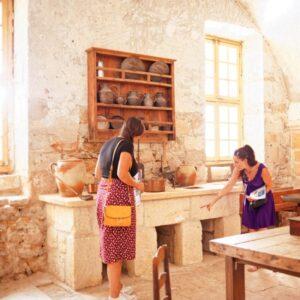
Inside, the apartments, lounges, art collections, and antique objects extend the journey through time. Each room has its own unique atmosphere. The large fireplaces evoke long winters, the ceilings tell the story of the artisans' craftsmanship, while the furniture seems to await the return of its former owners.
Outside, the moat reflects the facades with near-perfect tranquility. The trees extend the vistas, and the seasons continually transform the colors of the estate. Nothing seems static. The château lives to the rhythm of the light.
The silence of the stones
When the visit ends, an impression remains that is difficult to explain. We have not only discovered a monument; we have traversed a long conversation between the centuries.
The Château de La Chapelle-d'Angillon reminds us that civilizations survive not only through the battles they win, but also through the works they pass down. The old keep, the Renaissance gallery, the mementos of the Duke of Sully, and the dreams of Alain-Fournier all come together to form a single narrative where each era illuminates the one before it.
Perhaps this is what the stones are trying to say . They know that time carries people away, but they also know that it leaves behind traces capable of speaking still. At La Chapelle-d'Angillon, this voice is discreet. It never seeks to convince. It simply accompanies the visitor, long after they have left the moat, the gardens, and the light-filled gallery.
Prices and times (guided tour):
The castle is open every day from 9am to 12pm and from 2pm to 6pm , except for Christmas Day and Sunday mornings .
Sunday Mass: The castle is open to all for Sunday Mass, which is traditionally celebrated in the beautiful castle chapel every Sunday at 10 a.m.
Visit to the Château de la Chapelle d'Angillon. Prices:
- Individuals : €10
- Children (aged 7 to 12) and large families: €7
- Groups (20 people or more): €7
- Meal and entertainment for groups: €28 per person (white wine, red wine and coffee included).
- A superb tasting experience is offered to all visitors.
Complementary information

Customer reviews

No reviews yet.
Log in to leave a review. Login
Supplier information
Château de la Chapelle d'Angillon
 La Chapelle d'Angillon
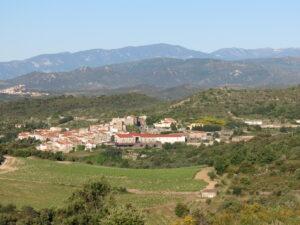
 The village originated with a hermit who came from Greece in the 9th century, Saint Jacques de Saxeau. In the following century, the Normans penetrated far into Berry. One of them, Gillon de Seuly, fortified the castle and the town that bears his name (11th-century keep). La Chapelle d'Angillon then became the "Residence" of the Princes of the sovereign principality of Boisbelle. The princesses of Albret, the Princess of Clèves, Gonzague, Prince of Boisbelle and Duke of Nevers, succeeded one another, and finally, the Duke of Sully, Minister to Henry IV, reigned over Boisbelle, commissioning the architect Salomon de Brosse to build the beautiful terrace and the new capital, Henrichemont.
Henry IV, the Sun King Louis XIV, the King's bedchamber... You will leave dreaming of the dramatic fate of the Princess of Clèves, swept away by the adventures of Le Grand Meaulnes, a young boy lost in the memory of a mysterious estate where the perfect Yvonne de Galais once lived.
Finally, a unique collection in Europe on 18th-century Albania: weapons, memorabilia, costumes, and more. The Alain Fournier Museum offers a visit that concludes with a wonderful tasting of Nançay shortbread cookies. Group bookings are welcome.
Receptions, weddings, and corporate events are also available.