
Castle Tour
The Château des Aix - Cultural Visit Description : The Château des Aix, a medieval fortress dating from the 17th century, is located in the heart of the Bourbonnais countryside. This splendid building features a rectangular main building flanked by square pavilions. The entire structure…
 Offered by
Château des Aix
Description

The Château des Aix - Cultural Visit
Description :
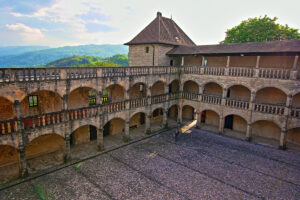
The Château des Aix, a medieval fortress dating from the 17th century, is located in the heart of the Bourbonnais countryside. This splendid building features a rectangular main building flanked by square pavilions. The entire structure is distinguished by its harmonious proportions and volumes, as well as its particularly refined decoration.
At the entrance, the main door opens onto a terrace, framed by rustication from Serlio's treatise on architecture. Doric pilasters support a frieze of the same order, crowned by a triangular pediment, thus creating a majestic entrance that reflects the elegance and refinement of the era.
The castle bears witness to a rich historical past, offering an immersive experience for architecture and history enthusiasts.
Opening hours and dates: From 01/07 to 11/09/2025, Monday, Tuesday, Wednesday and Thursday from 9am to 12pm and from 2pm to 5pm. Open for European Heritage Days (Sunday 21 September).
Complementary information

Customer reviews

No reviews yet.
Log in to leave a review. Login
Supplier information
<p>A former medieval fortress transformed in the 17th century, the <strong>Château des Aix</strong> stands elegantly in the heart of the Bourbonnais countryside. This remarkable building captivates with <strong>the harmony of its proportions</strong> and <strong>the richness of its architecture</strong> , a testament to the classical refinement of the era.</p><p> The residence comprises a <strong>rectangular main building</strong> flanked by <strong>square pavilions</strong> , forming a <strong>harmonious</strong> ensemble. The attention to decorative detail makes it exceptional: the <strong>entrance door opening onto the terrace</strong> features a <strong>rusticated frame</strong> inspired by Serlio's architectural treatises. <strong>Doric pilasters</strong> , a <strong>decorative frieze</strong> of the same order, and a <strong>triangular pediment</strong> crowning the whole structure lend the château a noble and elegant character.</p><p> This architectural gem perfectly illustrates the transition between defensive and residential architecture in the tradition of French castles.</p>