Château du Saussay Park and Garden
Saussay castle not to be missed
Cultural visits Offered by
Château du Saussay
Ballancourt sur Essonne
Offered by
Château du Saussay
Ballancourt sur Essonne
Description

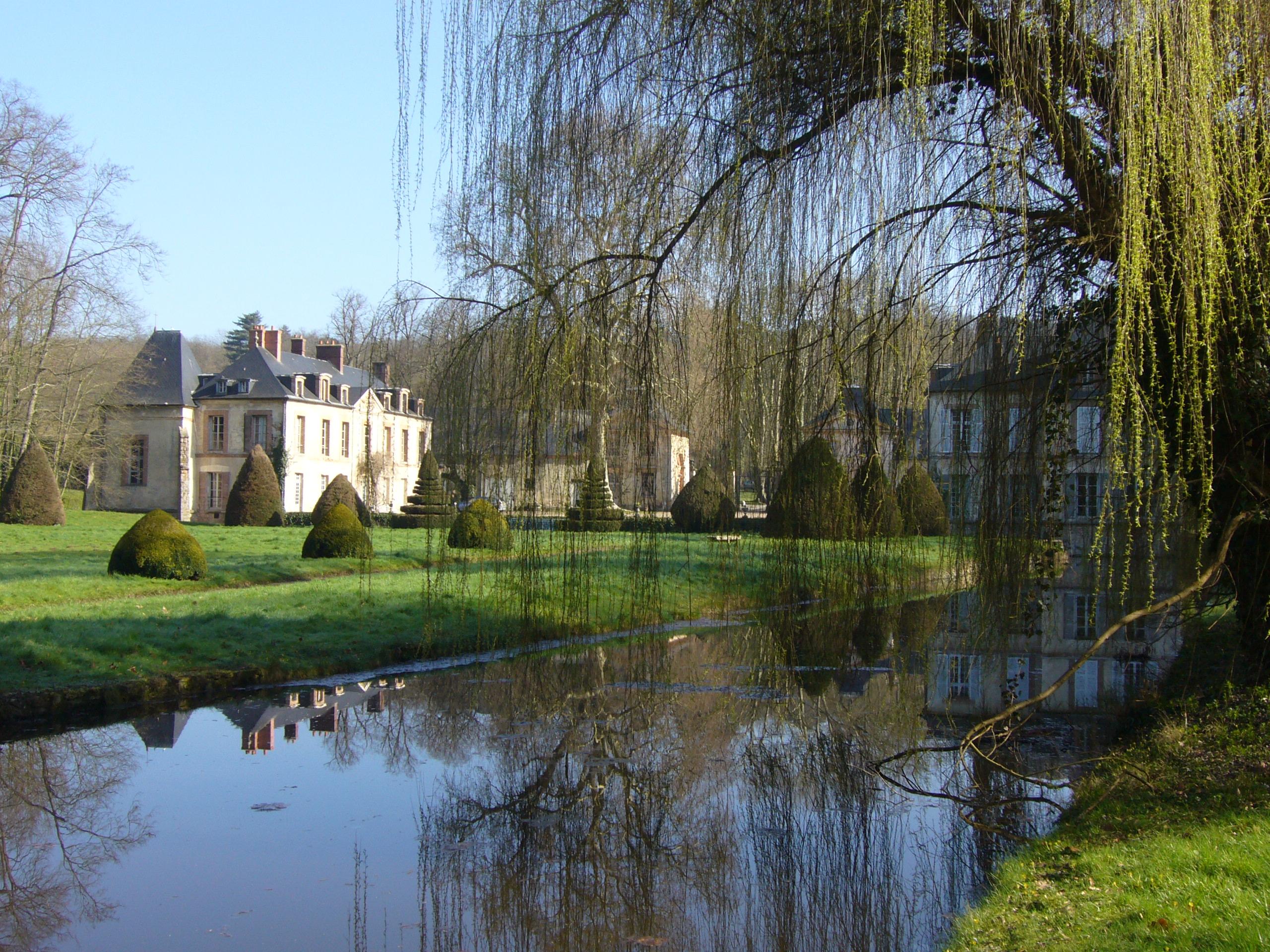
The formal French gardens of the Château du Saussay, Ballancourt-sur-Essonne, are a must-see and majestic site in the Île-de-France region. What to see and do at the Château du Saussay park:
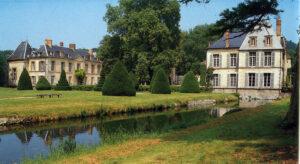
History: The Château du Saussay (also known as "Château du Grand-Saussay") is a French château located in the commune of Ballancourt-sur-Essonne, in the former province of Hurepoix, in the Essonne department, Île-de-France region, thirty-seven kilometers south of Paris. Situated on the site of a former Templar commandery and built on the ruins of a 15th-century feudal castle, the Saussay comprises a rare ensemble of two twin 18th-century pavilions facing each other at the entrance to a romantic park crisscrossed by water features. Inside, the reception rooms evoke the lives of the illustrious figures who once lived there: The oldest document mentions the sale in 1328 of the "Manoir du Sauçay" by Philippe Cocheriau du Sauçay to Dame Isabeau de Tremblay. A century later, the castellany of Sauçay was given by Louis XI to Olivier Le Daim, his barber, but also advisor, agent and diplomat. Olivier Le Daim, Count of Meulan, then Viscount of Corbeil, carved out important fiefs in the South of Île-de-France, at Saussay in 1474, then at Choisy and Vayres, conveniently located on the road from Paris to Tours, the capital of his master Louis XI . Opulent and powerful, Olivier Le Daim, born De Necker in Flanders, was initially called "the Bad," "the Evil One," or even "the Devil" in France before being ennobled by royal decree in 1474. He fell from grace after the death of Louis XI and was hanged at the Montfaucon gibbet in 1484. He is a character in numerous literary works: Victor Hugo's Notre-Dame de Paris and Walter Scott's Quentin Durward, in which he is portrayed as a key figure in the assassination of the Prince-Bishop of Liège, Louis de Bourbon, ancestor of the Bourbon-Busset family, the current owners of Le Saussay. After Olivier Le Daim's execution, Le Saussay was confiscated. Jean de Selve, Lord of Huison, became Lord of Saussay in the 1490s. Selve, a prominent diplomat under Francis I, had also acquired the estates of Vayres and Choisy, which belonged to Olivier Le Daim, and owned the estates of Villiers in Cerny and Bellesbat near Vayres. In 1497, Jean Lhuillier, a councilor and attorney general at the Parliament of Paris, bought the estate from Selve. In 1528, Côme Lhuillier, Lord of Saussay and Saint Gratien, Master of the Mint and alderman, owned Saussay. In 1573, his heir, Aignan Lhuillier, sold the estate to René de Gaumont, a jeweler, who passed it on to his descendants. From generation to generation, the Château du Saussay passed from the Gaumont family to the Bragelongne family (18th century), then to the Canclaux family (late 18th century), the Colbert-Chabanais family (early 19th century), and finally to the Bourbon Busset family (early 20th century). Two 18th-century châteaux face each other. The Château du Saussay , located in Ballancourt-sur-Essonne (Essonne, France), is a historic estate whose origins date back to the 14th century . It belonged to the Montmorency family and was later acquired by the Lords of Saussay in the 17th century. The park and gardens, typical of French formal gardens , were laid out under the influence of Le Nôtre , although less famous than those of Versailles. They are characterized by symmetrical avenues , parterres de broderie (embroidered flowerbeds), ponds , and groves , reflecting the classical art of gardening. In the 19th century , the estate was transformed by Count Henri de Prunelé , who added picturesque and romantic elements such as an artificial lake , follies (temples, grottoes), and exotic trees . The park then became a harmonious blend of classical and English landscape styles, with open vistas overlooking the surrounding countryside. Today, the Parc du Saussay, a designated Remarkable Garden , covers 50 hectares . It boasts a rich botanical collection (cedars, sequoias, magnolias) and animal species (peacocks, ducks). Open to the public, it offers guided tours and cultural events , perpetuating its historical and natural heritage. In the 19th century, the Romantic movement led to the creation of an English-style garden, and in the 20th century, the grand vista was redesigned by Duchêne. The site is open from April 1st to September 30th, every Sunday and public holiday from 1 pm to 7 pm, except during August when only the park is open. From July 1st to the last Sunday in July, it is open daily from 1 pm to 7 pm. Admission: Park visit: €4.50. Free for children under 12. Group rate available for 20 people or more. Reduced rate: unemployed, disabled, large family card holders, students, children aged 12 to 17. Self-guided visit of the park only: €4.50. From April 1st to September 30th, 2026 : Full price: €10 . Adult group rate: €25 (plus €7 per person). From April 1st to August 31st, 2026: Full price: €10 (guided tour of the castle and self-guided visit of the park). Reduced price: €7 (guided tour of the castle and self-guided visit of the park).
Complementary information

Customer reviews

No reviews yet.
Log in to leave a review. Login
Supplier information
Château du Saussay
 Ballancourt sur Essonne
 Located in the Essonne Valley, between Corbeil and La Ferté-Alais, the Château du Saussey, burned and ravaged in the 16th century by the Spanish army besieging Corbeil, was rebuilt under Henry IV and Louis XIII, then extensively modified before 1789. The château then belonged to JB de Bragelone, whose family was made famous by Alexandre Dumas. Monsieur de Canclaux, son-in-law of the Viscount de Bragelone, and then his daughter, wife of General Colbert, were its subsequent owners. In 1968, Jacques de Bourbon Busset, of the French Academy, donated it to his children, the current owners. Open to visitors on Sundays and public holidays from 2 pm to 6 pm from April 1st to October 1st, <b>and at the same times every day in July until the last Sunday of July. Groups are welcome upon request.</b>