
Visit to the Fortress
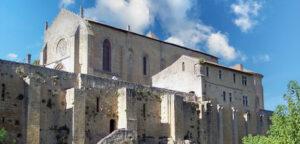
Medieval Fortress of Châtel-sur-Moselle Cultural visits The Medieval fortress of Châtel-sur-Moselle, a must-see site in Châtel-sur-Moselle, what to see, what to do: The Medieval Fortress of Châtel-sur-Moselle offers an immersion in history through its many remarkable buildings and structures: 15th century artillery gallery , located…
 Offered by
Medieval Fortress of Châtel-sur-Moselle
Châtel sur Moselle
Description

Medieval Fortress of Châtel-sur-Moselle
Cultural visits
The Medieval fortress of Châtel-sur-Moselle, a must-see site in Châtel-sur-Moselle, what to see, what to do:
The Medieval Fortress of Châtel-sur-Moselle offers an immersion in history through its many remarkable buildings and structures:
- 15th century artillery gallery , located on the southern front of the fortress.
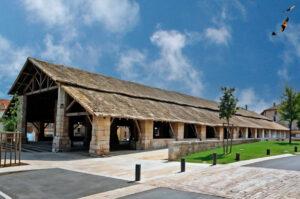
- The Gatehouse Stables , also dating from the 15th century.
- Burgundian wine press , in the cellars under the old arsenal.
- Galleries of the inner bridge and access to the castle bakery, an essential place to understand daily life in the Middle Ages.
The castle is also linked to important historical figures, such as Thiebaut IX , Lord of Neufchâtel d'Espinal and Châtel-sur-Moselle, Marshal of Burgundy, as well as Jean de Neufchâtel , Lord of Montaiou and Fontenov.
Schedules :
Opening Hours: Access to the site is only possible via guided tours, as part of the route is underground. The tour lasts approximately 1 hour 30 minutes. The fortress is open daily from 9:00 AM to 5:00 PM. Guided tours are available by reservation from September to June. Guided tours without reservation are offered in July and August at 10:30 AM, 2:30 PM, and 4:00 PM.
Prices:
- Adults and children aged 12 and over: €7
- Children under 12: €4
- Children under 6 years old: free
- Groups of 20 people and more: €6 for adults, €3 for children under 12 and free for children under 6.
Complementary information

Customer reviews

No reviews yet.
Log in to leave a review. Login
Supplier information
Medieval Fortress of Châtel-sur-Moselle
 Châtel sur Moselle
Commanding the crossing of the Moselle River, facing the intersection of three Roman roads and the gateway to Burgundy, Châtel played a strategic role throughout history, including in 1940 and 1944. A possession of the Counts of Vaudémont, a cadet branch of the House of Lorraine, since 1072, it came under the suzerainty of the Counts of Bar around 1200. In 1373, through marriage, Châtel became the property of the powerful Franche-Comté family of the Lords of Neufchâtel, who made it the center of a principality with Burgundian influence. Becoming Lorraine through an exchange in 1544, the fortress withstood the French invasion during the Thirty Years' War and changed hands nine times between 1634 and 1670. It was dismantled in 1671.
Built on a limestone promontory overlooking the Moselle River and isolated from the plateau by 57-meter-wide moats, the castle dominated the town and its fortifications, flanked by twelve towers and equipped with two gatehouses. Around a large square keep, the original 11th- and 12th-century castle was enlarged at the beginning of the 13th century.
It underwent considerable expansion in the 15th century and was adapted early for artillery. The combined length of its two sets of walls, flanked by 21 towers, reached 1.4 km.
A network of galleries connected the defensive works and linked the castle to the lower part of the town and to the banks of the Moselle.
Since May 1972, international volunteer workcamps and solidarity-based employment contracts have been working to clear and consolidate the towers and walls. The Vieux Châtel association also hosts open days, workshops, heritage classes, and training courses. The Ramparts Festival features exhibitions, concerts, and various other events.