Visit to the Castle
The Château Fort de Rambures is a privileged witness to the region's military and family history, with origins dating back to 1058. From the 14th century onwards, the lords of Rambures distinguished themselves as key players in the Hundred Years' War. In 1412, David de…
 Proposé par
Château Fort de Rambures, son Parc et sa Roseraie
Rambures
Proposé par
Château Fort de Rambures, son Parc et sa Roseraie
Rambures
Description

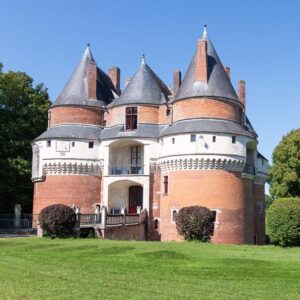
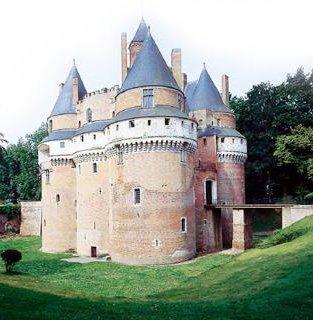
The Château Fort de Rambures is a privileged witness to the region's military and family history, with origins dating back to 1058. From the 14th century onwards, the lords of Rambures distinguished themselves as key players in the Hundred Years' War. In 1412, David de Rambures , Grand Master of the Crossbowmen of France, decided to build the current castle, an emblematic example of 15th-century military architecture. However, he was killed at the Battle of Agincourt in 1415, along with three of his four sons.
The castle, designed to withstand the assaults of the time, consists of four round towers linked by rounded curtain walls. Its design, particularly suited to artillery, includes impressively thick walls, ranging from 3.5 to 6 meters, built of brick for better resistance to projectiles. It is the first castle in France to combine brick and stone in its construction.
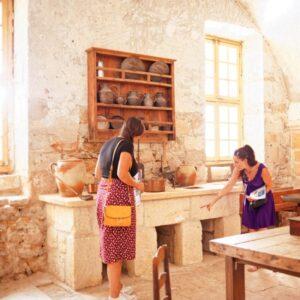
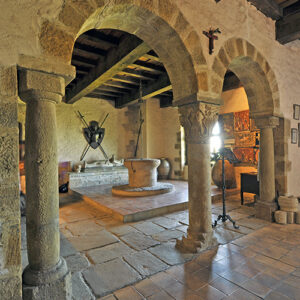
Visitors begin their tour in the reception hall, where an annual exhibition provides insight into the castle's architecture. An introductory film presents the site's military history in an accessible way. The guided tour then leads through the fully furnished castle interiors, offering a journey back in time 700 years. Among the rooms to explore are the dining room, the medieval bedroom, the library, and other spaces that reveal the daily life of the Rambures family throughout the centuries.
The appeal of the park and rose garden perfectly complements the visit to the castle, offering visitors a verdant setting to relax after exploring the fascinating history of this monument.
An enriching and much appreciated visit, which immerses visitors in the living history of a noble family at the heart of medieval military architecture.
Rambures Castle, its Park and Rose Garden - Cultural Visits
Opening hours and prices
The Château Fort de Rambures and its park are open, except on Wednesdays.
-
Individuals :
- School holidays from February to the end of March: 2pm to 6pm
- From April 1st to July 13th: 10am to 12pm and 2pm to 6pm
- From July 14th to August 25th: 10am to 6pm
- From August 26 to September 30: 10am to 12pm and 2pm to 6pm
- From October 1st to November 11th: 2pm to 6pm
- From November 12 to December 31: Information available on site
- Last admission at 5:15 PM
-
Groups (25 people or more): By reservation only.
Prices
- Visit includes access to the castle, park and rose garden for self-guided tours :
- Adult: 12 Euros
- Children (5 to 15 years old): 8 Euros
- Group (more than 25 people): 10 Euros/adult
Complementary information

Customer reviews

No reviews yet.
Log in to leave a review. Login
Informations sur le fournisseur
 Rambures
 Sur la route de la côte, nous voici dans le Vimeu. Le château fort de Rambures, classé Monument historique dès 1840 et figurant à "France miniature", présente, dans son écrin de verdure, un ensemble unique composé d'une forteresse féodale du XVe siècle meublée, des dépendances des XVIIe et XVIIIe siècles, un agencement intérieur du château, témoin des époques successives traversées par la famille qui l'a construit et l'habite, un parc à l'anglaise boisé de 15 ha. La roseraie a été créée en 2003.
Le Parc et la roseraie sont labellisés "Parcs et Jardins" et "Jardin Remarquable", 1 étoile au guide Vert Michelin.
Depuis le XIème siècle, époque à laquelle on commence à mentionner les seigneurs de Rambures, se tient leur dernière forteresse en plein cœur du Vimeu et toute proche de la frontière Normande.
La motte féodale est d'ailleurs encore visible à deux pas du château.
Trois châteaux fort vont se succéder et une seule et même famille va occuper les terres pendant 1000 ans.
Les travaux de l'actuel château fort vont débuter vraisemblablement au XIVème siècle et s'achever en 1470 le tout sur fond de guerre de 100 ans.
Le château que l'on visite aujourd'hui est un exemple rare d'architecture militaire du XVème siècle puisqu'il a, encore aujourd'hui, l'aspect voulu par les architectes militaires de son époque.
On attribue la conception de ce lieu unique à David de Rambures, Grand Maître des Arbalétriers de France, la plus haute fonction militaire de l'époque, le "Lord Rambures" du Henry V de Shakespeare.
A personnage exceptionnel, lieu exceptionnel puisqu'il s'agit là d'un château fort qui, s'il nous étonne encore aujourd'hui, va davantage étonner ses contemporains. En effet, l'une de ses grandes spécificités est qu'il s'agit du premier château français en brique et pierre, matériaux utilisés pour mieux résister à l'artillerie de son époque.