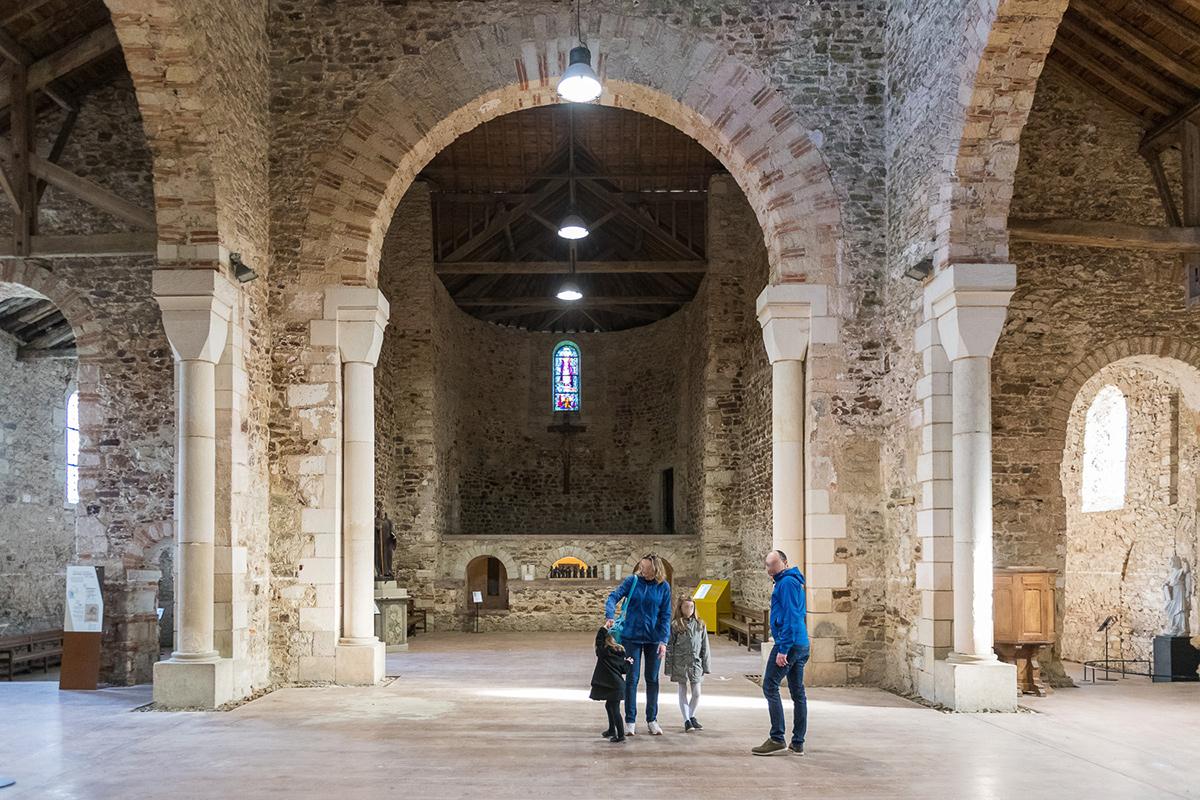
Visit to the Abbey Church of Saint Philbert de Grand Lieu
 Proposé par
Déas Abbey Church - Saint Philbert de Grand Lieu
Saint Philbert de Grand Lieu
Proposé par
Déas Abbey Church - Saint Philbert de Grand Lieu
Saint Philbert de Grand Lieu
Description

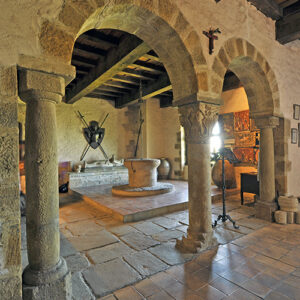
The abbey church of Saint Philbert de Grand Lieu, a rare and precious example of Carolingian architecture in Europe
At the beginning of the 9th century, around 819, the existence of Déas Abbey is attested in a charter signed by Louis the Pious, son of Charlemagne. At that time, the Vikings were ravaging the Loire-Atlantique coast, and it was in this context that the monks of Noirmoutier decided to make Déas a place of refuge by building a monastery there. For almost twenty-five years, the community moved between Noirmoutier and Déas with the changing seasons. Then, in 836, the monks chose to settle there permanently. They then undertook the project of transferring the sarcophagus containing the body of Saint Philibert (615-675). During this expedition to translate the relics, which lasted four days in June 836, twenty-three miracles were reported, affecting people who were blind, mute, suffering from fevers, or paralysis. It was the numerous reported healings that gave rise to a veritable pilgrimage to the abbey in the following years. Despite its renown, and due to the ever-present Viking threat, the abbot at the time led his monks to Cunault , near Saumur, as early as 845. In 847, the Vikings reached Déas , and part of the abbey was probably burned, but the sarcophagus remained hidden. In 858, the monks recovered the relics and took them to Cunault. In the 11th century, with peace restored, the monks, who had since made Tournus their mother abbey, returned to Déas. Until the 19th century, the old abbey underwent numerous alterations, changing its appearance without erasing its Carolingian origins. From the 14th to the 16th centuries, the Wars of Religion caused it further damage. The buildings were sold as national property during the French Revolution, and the church was then used as a fodder store. After the revolution, it resumed its parish function until 1869, when the new neo-Gothic church was built near the village. The building then underwent further renovations to become the site of a poultry market. In 1896, the abbey church was listed as a historical monument, and significant restoration work was undertaken until around 1906. The market then resumed until its final closure in 1936. Since the 1990s, the site has undergone extensive work and improvements in preparation for its opening to the public. Now called the "Abbey Church-Déas Site," it welcomes visitors, hosts events, and performances. Celebrations are still occasionally organized by the parish.
Opening days and hours:
-
- From April to September: Open Tuesday to Sunday from 10:00 to 12:30 and from 14:00 to 18:30. Guided tours at 11:00, 15:00, and 16:00. Ticket sales end 15 minutes before closing time.
- From October to March, Wednesday, Friday, Saturday and Sunday from 2:00 p.m. to 5:30 p.m.
- Annual closures: May 1st , December 24th, 25th, 31st and January 1st .
- Guided tours for groups (adults or young people) are also offered year-round by reservation.
Admission fees:
- Standard price: 5 Euros
- Reduced price*: 3 Euros *Children aged 6 to 18, students, job seekers, RSA beneficiaries, carer of disabled person, groups (from 10 people), person in possession of a ticket “Maison des Pêcheurs du lac de Grand Lieu”, or ticket purchased 45 minutes before the closing of the site.
Complementary information

Customer reviews

No reviews yet.
Log in to leave a review. Login
Informations sur le fournisseur
Déas Abbey Church - Saint Philbert de Grand Lieu
 Saint Philbert de Grand Lieu
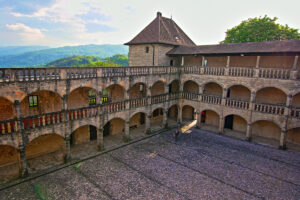
 <strong>A precursor to the great Romanesque pilgrimage churches</strong> , this building, which blends stone and brick, represents a <strong>transitional work between Romanesque and Romanesque art.</strong> A place of pilgrimage: this church, listed as a Historical Monument, was built at the beginning of the 9th century <strong>to protect the relics of Saint Philibert</strong> (7th century) from Viking desecration. Very quickly, <strong>miraculous healings around the Merovingian sarcophagus</strong> made it a stop on the pilgrimage route to Santiago de Compostela. At the heart of the former abbey, the <strong>cloister garden</strong> is peaceful and pleasant in all seasons. Also, discover the birds of Grand Lieu Lake. Activities are available on site (information at the Tourist Office).