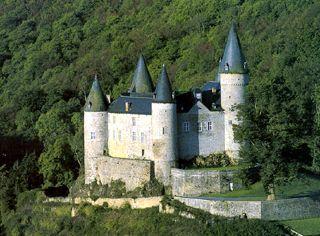
Castle Tour
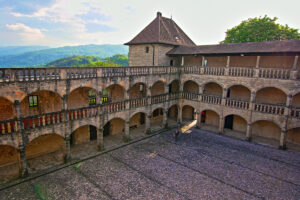
Vêves Castle – Cultural Tours Description : From the inner courtyard , you can discover the successive alterations made to the castle's residential buildings over the centuries. Vêves Castle boasts a fascinating history, marked by emblematic figures such as Hilarion, Count of Liedekerke Beaufort ,…
 Proposé par
Vêves Castle
Houyet
Proposé par
Vêves Castle
Houyet
Description

Vêves Castle – Cultural Tours
Description :
From the inner courtyard , you can discover the successive alterations made to the castle's residential buildings over the centuries. Vêves Castle boasts a fascinating history, marked by emblematic figures such as Hilarion, Count of Liedekerke Beaufort , and the Marquise de la Tour du Pin de Gouvernet , born Henriette-Lucy Dillon. The latter left invaluable accounts in her book "Journal d'une femme de cinquante ans" (Diary of a Fifty-Year-Old Woman) , which recounts the dark days of the Reign of Terror and her emigration to America, while also describing her role in the life of Marie Antoinette .
The coat of arms of Count Christian de Liedekerke Beaufort also adorns the castle, adding a touch of nobility to its heritage.
Prices and opening hours:
Vêves Castle is open from April 1st to November 4th , with specific opening hours:
- From April 5th to November 2nd : from 10am to 5pm
-
Individuals:
- Adults : €5.50
- Seniors and students : €5
- Children (6-12 years) : €3
-
Groups (minimum 20 people):
- Adults : €4.50
- Seniors and students : €4.50
- Children (6-12 years) : €2.50
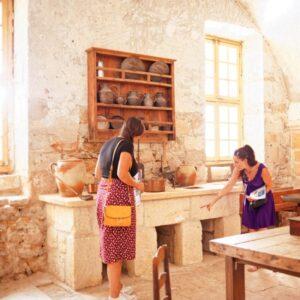
Visits are self-guided with written information available. In July and August , guided tours are offered in French, Dutch, English and German .
Complementary information

Customer reviews

No reviews yet.
Log in to leave a review. Login
Informations sur le fournisseur
Vêves Castle
 Houyet , N/A
 The Château de Vêves, in Celles, a historical monument located on the edge of the Belgian Ardennes, is one of the <strong>jewels of the province of Namur</strong> . Formerly a stronghold built on the rock, until the artificial creation, in the 17th century, of gardens and an easy access road for horse-drawn carriages, it was entirely surrounded by ravines and protected by external defenses: a set of towers and ramparts which have now disappeared.