

Richelieu Park, Cultural Visits
Description :
Richelieu Park offers an ideal setting for a stroll, with its manicured landscapes and tranquil atmosphere. Perfect for nature lovers, this park is a relaxing place where history and beauty meet. Take advantage of free access to explore this exceptional location.
Richelieu Park , open year-round, invites you to explore its vast grounds in a peaceful, verdant setting. Located in an exceptional location, it allows you to enjoy a self-guided visit at your own pace, with access to a variety of information through brochures available in several languages.
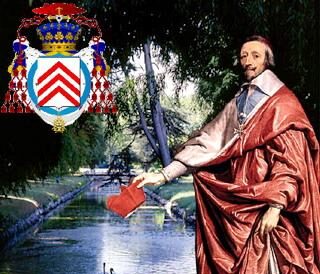
Richelieu Park, covering 475 hectares, was home to the Cardinal's vast estate, destroyed at the beginning of the 19th century. Born in 1585, Armand Jean du Plessis, the future Cardinal Richelieu, spent his entire childhood there. Having become chief minister to Louis XIII, he commissioned Jacques Lemercier, the King's architect, to build a very large château and a town nearby. His death in 1642 prevented him from enjoying it. During the French Revolution, the Cardinal's great-grandnephew emigrated to Russia; his property was confiscated, and the works of art housed in the château were sold or given to museums. In 1805, the badly damaged estate was bought by a property dealer who demolished the château to sell the materials. Today, only the Dome (part of the stables, formerly a riding arena), the Orangery, the Cellars, the main entrance, and the entire network of canals remain. In 1877, the estate was returned by Michel Heine, a banker in Paris, whose daughter had married a descendant of Richelieu. In 1930, Armand, Marquis de Jumilhac, Duke of Richelieu, having no heir, bequeathed the estate to the University of Paris, in memory of the Cardinal, Provost and Renovator of the Sorbonne.
Prices and visiting days:
- Opening :
- From April to October: Every day, from 10am to 7pm
- From November to March: Every day, from 10am to 6pm
- Self-guided tour : Brochures available in French, English, German, Dutch, Italian, Spanish .
Prices:
- Free entry
- Access for animals on leashes
- Picnic area available for a pleasant break outdoors.


 Richelieu