

Tours of the Chateau
 Offered by
Saumur Castle
Saumur
Description

Tours of the Chateau of Saumur
The jewel of the Loire Valley castle
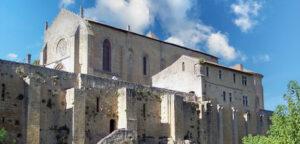
Château de Saumur, majestically situated overlooking the town and the Loire, invites you to discover its history and unique architecture.
Le château de Saumur It is one of the most iconic châteaux in the Valley of Kings. With its fairytale silhouette, this medieval palace perfectly embodies the romantic image of the Loire Valley châteaux.
Once held by the Counts of Anjou and later the Plantagenets, it was transformed into a royal fortress in the early 13th century during the reign of King Saint Louis. In the second half of the 14th century, Duke Louis I of Anjou (brother of King Charles V) converted it into a magnificent palace-castle. The miniature depicting it in the famous *Très Riches Heures du Duc de Berry* provides a precise image of it.
King René, the last Duke of Anjou, resided there periodically. After his death in 1480, the castle reverted to the royal domain.
Until the end of the Ancien Régime, the building served as the residence for the city’s various governors. The most famous of them, Philippe Duplessis-Mornay, was appointed in 1589. The city of Saumur had just been granted to the Protestant faction as a fortified stronghold. The new governor had the castle fortified with the defensive wall that still stands today—a design that was highly innovative for its time (the section facing the city was built nearly a century before Vauban’s fortifications!).
During the 17th and 18th centuries, the Château de Saumur also served as a prison: prisoners on letters of cachet then from the 1780s prisoners of war (mainly British sailors).
The building was spared by the Revolution. It was saved from the destruction to which its dilapidated state had condemned it by Napoleon I's decision to convert it into a state prison.
Major works were undertaken to adapt it for its future purpose. However, the political shift associated with the Restoration of the monarchy altered its destiny once again. In 1814, it was assigned to the Ministry of War and became a depot for arms and ammunition.
The military departed in 1889. The City then began negotiations with the State to purchase the château with the aim of housing the municipal museum there. The acquisition was completed in 1906, and restoration of the monument began. In 1912, the partially restored monument opened to the public. The municipal museum was installed on the first floor of the north wing, while the horse museum (an association-run museum) was located on the second floor.
The château also offers temporary exhibitions and activities for children.
- Not to be missed: the view from the lookout, the Cheval collection, the tapestries, and the unique ceramics display.
A castle where history, architecture and museum combine for an unforgettable visit.
During your visit to Saumur Castle, you will be able to:
- Admire a magnificent panoramic view of the town of Saumur and the Loire.
- Explore the main courtyard, a place steeped in history.
- Discover in the exhibition rooms the ceramics (one of the finest collections of earthenware in France), the tapestries (from the 15th to the 18th century, most of which are listed as historical monuments).
- See a selection of the finest pieces from the museum's equestrian collections, which bear witness to the rich history of the castle.
Enjoy a 30-minute guided presentation—in French and English—covering the site's history and architecture. This service is included in the admission price.
You can also take the guided tour (in French) of the collections at 10:45 am and 3 pm (subject to guide availability).
The Château-museum is a listed historical monument. Visiting conditions can be difficult. Access to the castle's main courtyard and upper floors is only possible via stairs.
To ensure the smooth flow of visitors and to protect the artworks, strollers, baby carriers, and large bags are not permitted inside the castle. Lockers are available at reception.
Tours of the Chateau of Saumur
Visiting hours:
The Château-Museum is open to the public from February 6 to March 31, Tuesday to Sunday, from 10 a.m. to 1 p.m. and from 2 p.m. to 5:30 p.m.
From April 1st to June 30th and from September 1st to September 30th, Tuesday to Sunday and on public holidays Mondays from 10am to 6pm.
From July 1st to August 31st, 7 days a week, from 10am to 7pm. Open on July 14th and August 15th.
From October 1 to December 31, Tuesday to Sunday, 10:00 am to 1:00 pm and 2:00 pm to 5:30 pm. Closed on December 25 and January 1.
Annual closure from January 1 to February 5, 2027.
Group tours:
Guided tours are available year-round by reservation.
Prices:
- Full price €9.50
- Reduced price €7.00
(Ages 7-18, high school students, apprentices, university students, holders of a disability card and their companions, companions holding a Muséo Pass card, SNCF TER Pays de la Loire users with a valid season ticket) - Free for children under 7 years old
- Family rate €26.50 (+1.50€ per additional child)
(2 adults and 2 children) - Group rate for adults 7.30€
(from 12 people) - Reduced Rate other type of group 6.00€
(from 12 people, 7-18 years, RMP)
Complementary information

Customer reviews

No reviews yet.
Log in to leave a review. Login
Supplier information
Saumur Castle
 Saumur
<p style="margin-bottom: 0cm">For centuries, Saumur has breathed to the rhythm of its castle. Visible for miles on its rocky outcrop, this fortress is like the castles in our history books and fairy tales.</p><p style="margin-bottom: 0cm"> The Château de Saumur, a palace-castle of the Dukes of Anjou in the 14th and 15th centuries, where King René resided, is the last remaining example of the princely palaces erected by the Valois dynasty. A residence of the city's governors, a prison, and later an arms and ammunition depot, it was purchased by the city in 1906 to house the municipal museum, now a Musée de France. Today, visitors can explore its rich collections, displayed in the former apartments of the Dukes of Anjou, within an educational and informative museum setting.</p><p style="margin-bottom: 0cm"> On the first floor of the monument, you can admire the Decorative Arts section. Furniture, tapestries, and ceramics from the 14th to the 18th centuries are on display. On the second floor, the extensive equestrian collection, boasting over 7,200 pieces of harnesses, books, and works of art, allows for a regular rotation of the themes presented. And always... an exceptional view of the Loire River and the city!</p><p style="margin-bottom: 0cm"> On the second floor of the Château, discover the "Games & Jousts on Horseback" exhibition: this exhibition evokes the origins of the Olympic and Panhellenic Games. Martial arts, tournaments, jousts, and carousels highlight the various techniques of playful training for war, spanning a broad period from the Middle Ages to the 19th century. Finally, a third section presents the most popular team sports: polo, poto (horseball), and buzkashi.</p>