
Comfort Rooms
Located within the historic monument, these spacious, air-conditioned rooms, over 24m², offer a 160x200cm double bed or two twin beds, a welcome tray, a flat-screen TV, a safe, Wi-Fi, and a shower room with a hairdryer. The toilet is separate. Prices are for two people…
 Proposé par
Premonstratensian Abbey
Pont à Mouson
Proposé par
Premonstratensian Abbey
Pont à Mouson
Description

Located within the historic monument, these spacious, air-conditioned rooms, over 24m², offer a 160x200cm double bed or two twin beds, a welcome tray, a flat-screen TV, a safe, Wi-Fi, and a shower room with a hairdryer. The toilet is separate. Prices are for two people and include breakfast. 22m²
Complementary information

Customer reviews

No reviews yet.
Log in to leave a review. Login
Informations sur le fournisseur
Premonstratensian Abbey
 Pont à Mouson
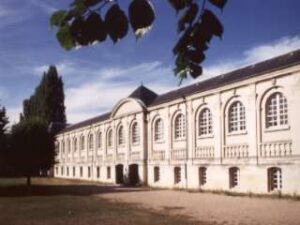
 Considered one of the great religious orders of the Middle Ages, along with the Cistercians and Benedictines, the Premonstratensian Order, founded by Saint Norbert in 1121 near Laon in the Aisne department, made a significant contribution to the religious and spiritual history of Lorraine until the 17th century. From the small Abbey of Sainte-Marie-aux-Bois, located about ten kilometers from Pont-à-Mousson, the magnificent Sainte-Marie-Majeure Abbey emerged at the beginning of the 17th century, thanks to Servais de Lairuelz, Premonstratensian abbot of Verdun and reformer of the order, aided by the Jesuits of the city who, through their university, had transformed the town into a religious and intellectual center that quickly became a bastion of the Catholic faith. The abbey, as we know it today, was begun in 1705 during the reign of Duke Leopold I of Lorraine, with the classically inspired architect Thomas Mordillac laying the first stone.
Completed by Nicolas Pierson, it also provides us with an example of the Baroque style, characterized by its striking restraint.
Religious and intellectual life flourished there. Upon the death of Duke Stanislas in 1766, the royal edict annexing Lorraine to France suppressed the Society of Jesus, and this marked the decline of most of the city's religious communities.
Shortly thereafter, the Revolution completed the destruction of all the city's convents. Only the Premonstratensian Abbey, or nearly so, survived. In the 19th century, the Bishopric of Nancy established a minor seminary there. The professors left the building in 1906 following the law separating Church and State.
The building then became state property, before being transferred to the city in 1912 and serving as a civilian hospital until 1944. The extensive renovations required led the city council to vote in 1945 for the complete demolition of what remained standing. Fortunately, individuals concerned about their heritage refused to see the building, a testament to the prestigious past of their city and of Lorraine, disappear.
An association was quickly formed, and the building permit was issued in 1959. Architects, sculptors, plasterers, glassmakers, and wrought-iron craftsmen then embarked on a long and arduous task. It would take no less than twenty years to rebuild everything.
Like the Cistercian abbey of Royaumont, the Premonstratensian abbey has been transformed into a cultural center. Thanks to extensive renovations, the association was able to open part of the buildings to the public in October 1964.
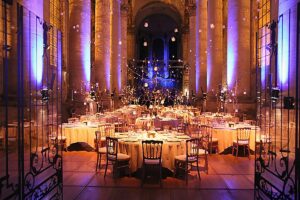
Concerts, exhibitions, receptions, seminars, guest rooms.